Chained Minds: The Mental Health Crisis Inside Somali Prisons
A Human Rights Documentation Report on Abuse, Arbitrary Detention, and the Criminalization of Mental Illness in Somalia
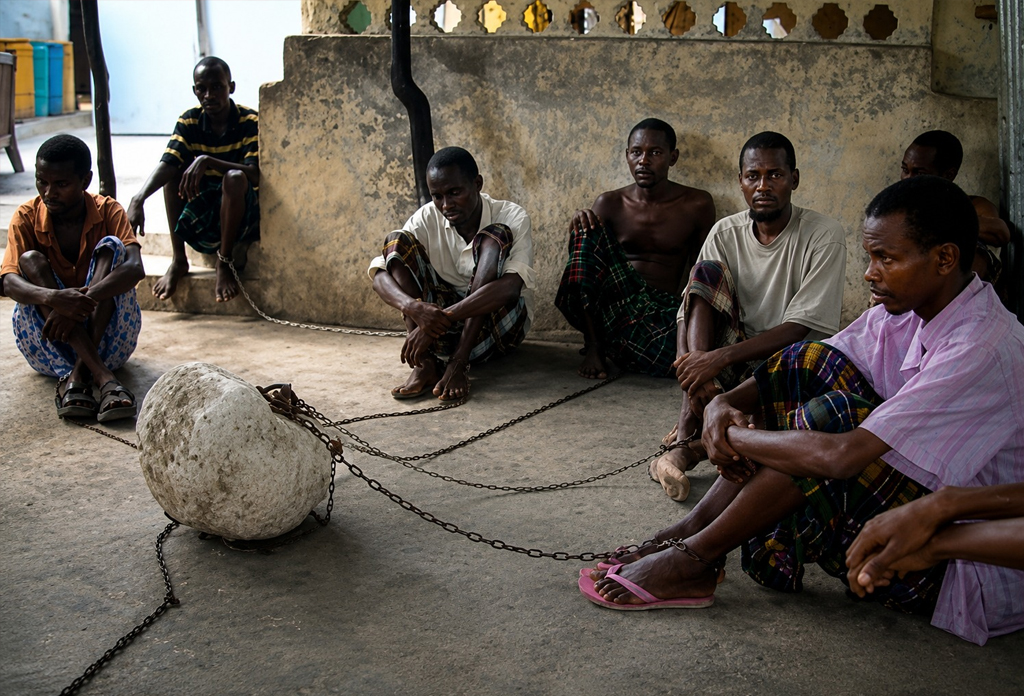
As the world marks Mental Health Awareness Month, thousands of people with mental health conditions in Somalia remain invisible, neglected, and trapped inside prisons where treatment has been replaced with punishment. They are not criminals. They are survivors of war, trauma, and a collapsed healthcare system — and the state has chosen to chain them.
Prisons as the Last Resort for the Mentally Ill
Across Somalia, people with actual or perceived psychosocial disabilities continue to face severe human rights violations inside prisons and detention facilities: arbitrary detention, beatings, prolonged chaining, forced isolation, overcrowding, and inhumane conditions that worsen trauma and deepen mental suffering. Instead of receiving medical care and psychosocial support, they are locked behind bars in environments entirely inappropriate for human beings in psychiatric distress.
Mental health remains one of the most neglected sectors in Somalia. The country faces a severe shortage of psychiatrists, mental health nurses, medication, rehabilitation services, and specialized care facilities. For many families struggling to care for relatives with mental health conditions, prisons and detention centers have become the only available option — not because it is appropriate, but because there is nothing else. This growing crisis reflects the devastating long-term consequences of decades of armed conflict, displacement, poverty, trauma, weak healthcare systems, and widespread social stigma surrounding mental illness.
Criminalizing Mental Illness: Detained Without a Crime
In Somalia, prisons are increasingly being used as holding facilities for people with psychosocial disabilities — including individuals who have committed no crime and who remain detained without due process or legal oversight. Information obtained from prison staff in Mogadishu indicates that hundreds of detainees identified as mental health patients are currently being held without criminal records. Many are confined simply because there are no functioning community-based mental health services capable of supporting them.
People with mental health conditions in Somali prisons are frequently subjected to abusive restraints, prolonged confinement, involuntary treatment, and severe restrictions on movement. Reports from prison personnel and former detainees describe incidents in which prisoners experiencing psychiatric distress are beaten, chained, or isolated rather than provided with professional medical care. A prison guard who spoke to OPR acknowledged that detainees with mental health conditions are at times beaten with belts when confrontations occur with security personnel. Such practices expose the complete absence of trained mental health staff and the dangerous reliance on violence and punishment as the default response to psychiatric crises.
Trauma, War, and a Healthcare System That Was Never Rebuilt
Somalia’s mental health emergency cannot be separated from the country’s decades-long history of violence and instability. Years of civil war, forced displacement, insecurity, and social collapse have left deep psychological scars across generations. Field observations and available research indicate alarmingly high rates of severe depression, post-traumatic stress disorder, schizophrenia, bipolar disorder, anxiety disorders, and substance-induced psychosis. The widespread use of khat — a stimulant commonly consumed across the region — has been linked to worsening mental health conditions and the onset of psychotic disorders in a significant number of cases.
Despite the scale of this crisis, Somalia lacks reliable national data on mental health prevalence, detention practices, and treatment outcomes. Mental health institutions and detention facilities rarely maintain transparent records, making accountability and reform structurally difficult. For years, individuals with psychosocial disabilities have largely been abandoned to family support systems that are themselves overwhelmed and under-resourced. Social stigma continues to isolate many people from their communities, while the absence of state protection leaves them vulnerable to abuse, exploitation, and unlawful detention.
Prison Conditions That Turn Illness Into Suffering
Conditions inside Somali prisons further intensify the psychological suffering of those already living with mental illness. Overcrowding, inadequate sanitation, poor nutrition, lack of ventilation, and pervasive violence create environments that are deeply damaging to mental well-being for all detainees. For those with psychiatric conditions, these circumstances are not merely difficult — they are catastrophic. Many receive no treatment whatsoever. Essential medication is frequently unavailable. Prison officers typically receive little or no training on mental health care or psychiatric emergencies, leaving them entirely unprepared to respond to crisis situations in ways that do not involve force.
Key Concerns Documented by OPR
- High levels of untreated psychiatric conditions among detainees
- Arbitrary detention of individuals with psychosocial disabilities who have committed no crime
- Chaining, shackling, and prolonged solitary isolation
- Absence of psychiatrists, mental health nurses, and essential medication
- Substance abuse complications linked to khat use among the detained population
- Severely overcrowded and degrading prison conditions
- Absence of legal safeguards, due process protections, and independent oversight
These practices violate fundamental human rights protections guaranteed under international law — including protections against torture and cruel, inhuman, or degrading treatment; against arbitrary detention; and against discrimination on the basis of disability. Somalia, as a State Party to the International Covenant on Civil and Political Rights, the Convention against Torture, and the Convention on the Rights of the Child, bears specific legal obligations it is currently failing to meet.
“Imprisoning people with psychosocial disabilities long-term is discriminatory, violates their basic rights, and does not provide them with the services they need.”Ismail Abukar, Chairperson, OPR — speaking at a joint meeting with UNODC, UNSOM, ICRC, and civil society organizations
A Call for Urgent Reform: Beyond Symbolic Observance
Mental Health Awareness Month must serve as more than a symbolic observance. It must be a moment of accountability and urgent action for Somalia’s authorities and their international partners. The current system — in which prisons serve as the default response to psychosocial disability — is not a healthcare solution. It is a human rights violation. It causes measurable harm, it deepens suffering, and it is entirely inconsistent with Somalia’s obligations under domestic and international law.
Reform requires investment in the community-based mental health infrastructure that has never been built, the removal of people with psychosocial disabilities from prison environments where they should never have been placed, and the training of security personnel in mental health response. It requires independent monitoring, enforceable legal protections, and the political will to treat mental illness as a public health issue rather than a policing problem.
OPR Calls On Somalia’s Authorities and International Partners To:
- Expand community-based mental health services and invest in specialized care facilities
- End the detention of people with psychosocial disabilities in prisons immediately
- Train prison and security personnel on mental health response and de-escalation
- Increase access to psychiatrists, mental health nurses, and essential medication in all facilities
- Establish independent monitoring and accountability mechanisms for detention conditions
- Strengthen legal protections for people with disabilities, including independent legal oversight of detention
- Invest in rehabilitation, psychosocial support programs, and reintegration pathways
Behind the Walls: Not Criminals, But Survivors
Behind the walls of Somali prisons are hundreds of people suffering not only from mental illness, but from abandonment, abuse, and systemic neglect. Many are not criminals. Many are survivors of trauma, conflict, poverty, and a collapsed healthcare system that was never restored after decades of war. They are there not because they are dangerous, but because Somalia has built no alternative capable of receiving them.
This Mental Health Awareness Month, Somalia must confront a painful and long-deferred reality: mental illness cannot be treated with chains, isolation, and imprisonment. The continued criminalization and mistreatment of people with psychosocial disabilities is not a healthcare policy. It is a human rights failure — one that is documented, ongoing, and entirely within the power of the government, civil society, and the international community to end.
People with psychosocial disabilities deserve dignity, care, protection, and freedom from abuse. Not chains. Not punishment. Care.
How to cite this piece
Organization for Prisoners' Rights. (2026). Chained Minds: The Mental Health Crisis Inside Somali Prisons. Mogadishu: OPR. https://opr.org.so/news/chained-minds-the-mental-health-crisis-inside-somali-prisons/