
Let In as Children, Deported at 22: Sweden Sends Twins to Mogadishu
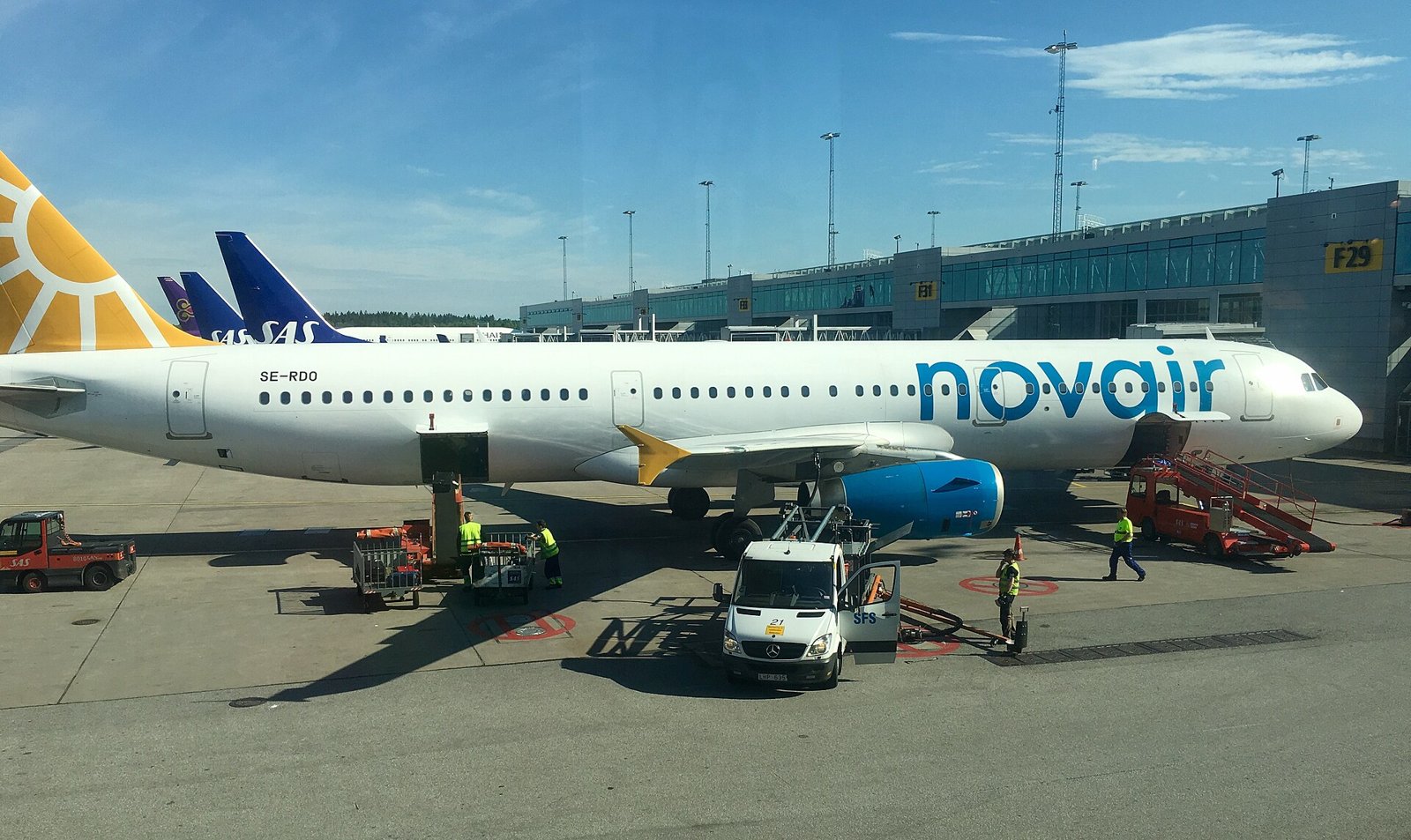
The bus left the Märsta detention centre at about nine o’clock on Tuesday night, 27 October, for the short drive to Arlanda airport. Nobody on it was travelling by choice. The news outlet Nyhetsbyrån Järva reported that ten people were aboard, four women and six men, with three guards assigned to each of them. Those who resisted were handcuffed, and at Arlanda they waited four hours, brought in by an entrance that kept other passengers from seeing them. On the tarmac a chartered plane was waiting with about sixty people on board, most of them guards, medical staff and police, and at around one in the morning it took off for Mogadishu. I did not see any of this. I have put it together from Swedish reporting, including a phone call from Mogadishu by one of the ten, and from what Najib told an interviewer two days before he boarded.
His name is Najib, he is 22, and he had seen it coming. Speaking by phone to Idaja Hassan Adde, he described how the centre fills with people of one nationality just before a charter leaves. Iraqis arrived and were gone the same night, he said. Syrians left the next evening. Now Somalis were arriving, and he and his twin sister Aliya were told they would fly at one in the morning. SVT, Sweden’s public television broadcaster, met the twins hours before they left and reported that they were deported that evening. “They say they only deport criminals, but we are not criminals,” Najib said in the video SVT published, in my translation from Swedish.
Both twins say they were told something else as well: that they should tell people their return was voluntary, and keep quiet to the press about being removed by force. Five days before the flight, four opposition parties had agreed what a law to stop deportations like theirs should cover. Migration Minister Johan Forssell confirmed to the newspaper Expressen that deportations to Somalia had been carried out.
I could not reach either twin after the flight, and I have not been able to confirm where they are now or how they were received in Mogadishu. What I can set out is how two people who came to Sweden as children, at about age twelve, ended up on that plane, what they say was done to them before it, and why the political push to stop such deportations arrived too late to protect them. Three sets of authorities each had a hand in it: the Swedish agencies that carried out the removal, the politicians who said it should stop but had not made it law, and a Somali government that issued the twins’ travel papers and, according to Swedish Radio, was at the same time receiving Swedish aid that had been redirected towards cooperation on returns.
Aliya and Najib arrived with their family roughly ten years ago. Their mother holds a residence permit as a refugee. The twins received temporary permits at seventeen as her relatives, but once they turned eighteen they no longer counted as her dependants under Swedish rules, while their younger siblings still do. Aliya finished an upper-secondary economics programme and was working as an assistant nurse. Migrationsverket, the Swedish migration agency, refused them permits on 29 April. It found that the twins were not so dependent on their family that they could not live apart from it, and a migration court found Aliya’s account insufficient to show that she needs protection.
Swedish newspapers call this situation teenage deportations: young people who came as minors with a parent and are ordered out as adults while the rest of the family stays. The politics moved fast this year. On 1 June the government proposed an exception that raises the age limit for permits based on family ties from 18 to 21. The next day Migrationsverket’s director-general stopped enforcement “until further notice” in two groups: young adults aged 18 to 21 who have or had a permit through a parent, and people whose expulsion decision became final on or after 1 January 2025 and who are still in Sweden. The agency has since resumed processing applications, and its own guidance now asks people whose removal was paused to apply for a new permit by 1 December 2026, after which it can resume their return case. Those rules took effect on 1 October. On 13 October the social insurance committee of the Riksdag, Sweden’s parliament, agreed to start preparing a stop law, a statute that would halt these deportations, although the parties disagreed on whether one was needed. On 22 October the Social Democrats, the Left Party, the Centre Party and the Greens agreed what it would cover. The migration agency’s director-general, Maria Mindhammar, said the agency had not closed the door to pausing deportations once the committee had set out a formal basis.
For the twins, who had hoped the political push would save them, none of that reached the airport. The headline rule in force since 1 October gives a permit to former family-ties holders under 21, and Aliya and Najib are 22. That is how I first reported it, and it is not the whole law. In the government’s bill and the committee report, which I have read since, a person over 21 can still get a permit if they live in the same household as the parent and depend on that parent in a way that goes beyond the ordinary tie between a parent and an adult child. A temporary route that runs to the end of 2027 has no age limit at all: it lets someone with a final expulsion order apply for a permit from inside Sweden if they held a family-ties permit as a child after 1 October 2023 and the order became final on 1 January 2025 or later. I have not seen the twins’ files, so I cannot say whether either route fits them. I have read the bill and the committee report, not the final text of the statute, and I am not a lawyer, so a Swedish lawyer should check this reading. What I can say is that an agency that stopped enforcement for these groups in June has not told me whether it checked these two people against that stop before the flight left. Their lawyer, Eva-Lena Hannerfors, had told the magazine Hemhyra in September that it was unclear whether the new rules would help them, and she filed a request to stop the removal and prepared a complaint to the European Court of Human Rights. The stop law was still only a committee proposal on the night of the flight. Forssell has said he doubts another law is needed because new rules already apply, and Jessica Stegrud of the Sweden Democrats said the committee agreement covers only preparing the issue. Aliya gave the plainest reading to the media: in reality, she said, nothing is being paused.
One detail in Najib’s account needs care. He believes officials wanted him gone before 1 October, when the new rules began. I found no official source for that, and the twins fall outside the headline age limit anyway, so I treat it as his belief. He also says their lawyer asked the authorities why the twins were still being deported if parliament had moved to stop such deportations, and was told that they could not comment and that the twins would go that night. I could not confirm whether she meant the new age rules or the proposed stop law. On its face, neither the new age rule nor the unfinished stop law barred the removal. The June enforcement stop and the exceptions above are a different question.
The flight on 27 October was a second attempt. In September the twins were taken to Arlanda for a scheduled flight to Somalia via Turkey. Other passengers protested, the pilot refused to fly, and everyone was taken off the plane. Kriminalvården, the Swedish prison and probation service that carries out the transports, told the magazine Kvartal that a captain may refuse a disruptive passenger and that a halted deportation is not unusual. The twins describe what followed very differently.
I listened to the video interview with the twins that Svesom Media, a Somali community outlet in Sweden, published this week. It was recorded after the September attempt, when they were back in detention. Najib appears with heart-monitor patches on his chest, which he shows in the video, and marks on his hands that look like those from blood tests. He says that during and after the September flight three officers held him down, one with a knee on his chest and the other two kneeling on his arms. He says his thumb was dislocated and that his chest is bruised. He says he has fainting spells with seizures, that each time he collapses he is taken to hospital, where the records are kept, and that he has hospital papers from the times he collapsed on trains and in the street, along with a card in his pocket naming his mother as an emergency contact. He told officers about the condition, he says, and was told they did not care. He fears that in Somalia he will not get the medication that keeps him from collapsing, and says he may die there.
Aliya describes being held down by two male officers who pressed their knees into her chest and held her mouth shut. Her glasses broke and she has a bruise under her left eye, which is visible in the video. She says she was not taken to hospital and was given only paracetamol for her bruises, including the one under her eye. She gave Swedish media a similar account in September. She says that when she went to what she had been told was a routine appointment, she was arrested, and that on the second day officials showed her two documents bearing Somali stamps and told her these were her travel papers. She says she was told that her belongings would be handed to her in Mogadishu, and that she should say her return was voluntary. Najib says he was told the same, and to keep quiet to the press. I could not verify any of this independently, so I present it as the twins’ own account. Kriminalvården has answered part of it in the press, but only about September. Aftonbladet reported on 23 September, citing Kriminalvården’s incident report, that the removal was stopped because one of the twins began to scream and stand up just before the plane taxied out, and that the pilot then decided they should leave the aircraft. Aftonbladet also corrected its first version of the story to say that, according to Kriminalvården, no coercive measures were used and no handcuffs were put on anyone aboard. That is at odds with the twins’ description of being held down, although I do not know how Kriminalvården defines coercive measures, and when I first wrote this I had not seen the report itself. I have now, and I set out what it says under Updates below. Kriminalvården told Aftonbladet it cannot comment on individual cases.
Both twins say they are not criminals and that officers never gave them a straight answer about why they were being forcibly deported. Aliya says she runs her mother’s household, looking after her younger siblings and handling the family’s needs. She had a laboratory exam for her nursing studies on the day she was arrested.
Svesom Media reported, citing unnamed sources, that a large number of police officers arrested the twins and other Somalis at about eight on the evening of the flight, and that force was used on them before they were put on the plane. I could not verify that report. It is consistent with the twins’ own account of how they were handled, and with Järva’s account of the bus leaving Märsta an hour or so later.
Several things remain unconfirmed. I cannot confirm that the twins were hurt in the way they say, though Aliya’s bruise can be seen on video, Najib appears on video with heart-monitor patches, and Najib was treated at a hospital after the September attempt. I cannot confirm that they were told to describe their return as voluntary. I do not know where they are now. On 30 October, Swedish time, I sent questions to Migrationsverket, the police and Somalia’s Foreign Ministry and asked for replies by 2 November, followed within the hour by a question about the alleged instruction. Migrationsverket has acknowledged both messages. The police press office replied the same day that it is responsible for enforcing removal decisions but that Kriminalvården carries out the transports, said it had no information on my question about the instruction, advised me to ask Kriminalvården for the protocol of the removal, and pointed to press reports in which Kriminalvården says no coercive measures were used in September. Later on 30 October I put the same questions to Kriminalvården, including the alleged instruction and a request for the incident report and protocol for this removal and for the September attempt, and asked for a reply by 2 November. The replies received so far are under Updates below, and I will update this piece if I reach the twins.
How many people were on the plane is the least settled fact in this story. Najib’s 90 to 95 is close to the figure of 90 given by the activist group Vi står inte ut, which said the plane would also carry Somalis from Norway and Finland, with Sweden as its last stop. I have not found any reporting that confirms that, and Järva’s own source contradicts it. One of the ten, who phoned an imam in Rinkeby from Mogadishu, said that apart from the ten taken from Märsta the plane held only guards, medical staff and police, about sixty people in all. Järva adds that posts on social media had said people from Norway and Denmark would be deported at the same time. Norwegian police figures for the first half of 2026 show only two forced-return operations to Somalia, involving six Somali citizens, which is a small base for a plane said to carry dozens, though it says nothing about what happened in October. Expressen, Aftonbladet and Järva put the number from Sweden at nine or ten. Whatever the true count, the gap between ten and ninety shows how little has been made public. Kriminalvården would not confirm who was on board. Its spokesperson Mikael Ringberger called such transports normal handling and said the service charters its own planes when many people travel to the same destination or when security requires it.
Najib told Idaja Hassan Adde that the authorities would use a special airline. I found no evidence of an airline that exists only to deport people from Scandinavia. Swedish removals run through the migration agency, the police and Kriminalvården, which buys charters from commercial operators, and Frontex, the European Union’s border agency, coordinates joint flights between countries. That is consistent with Najib’s description of people being gathered by nationality at Märsta to wait for a charter, though I could not confirm that pattern independently.
Swedish reporting also links the flights to a money trail. Forced removals from Sweden to Somalia rose from six in 2023 to 28 or 29 in 2024, depending on the count, and the government says they have roughly tripled since 2022. Swedish Radio’s investigative programme Ekot reported in October and December 2025 that the rise followed a secret understanding between the two governments, reached in December 2023, and that about 100 million kronor of Swedish aid was redirected to support it. Forty million kronor were paid in 2024 to a World Bank fund, the Bank declined to supply a further sixty million, and Somalia halted deportations. In May 2025 Sida, Sweden’s aid agency, received a changed instruction letter, and sixty million kronor went through the United Nations Development Programme with the Somali prime minister’s office, over the objections of Sida staff. Omar Mahmood of the International Crisis Group described the arrangement as almost the prime minister’s fund. Somalia’s prime minister denied any link between aid and deportations, and, in Ekot’s reporting, the Swedish government said there was no formal agreement, only a shared understanding. A separate payment of about five million kronor through the UN migration agency IOM paid for three posts in the Somali prime minister’s office. Morgan Johansson, a former Social Democratic migration minister, called that pure bribery.
I raise the money because it is the setting for these flights, not because I can tie it to the twins’ case, and I have found no evidence that it affected them. It does show that returns to Somalia are a priority between two governments, and decisions about who goes on a plane are made in that setting. Svesom Media has asked the Somali government and the prime minister’s office to say publicly whether any agreement or cooperation on returns existed.
The paper trail holds a puzzle. Dagens Arena described two Somali fathers held for months because Migrationsverket did not accept their Somali identity documents, while the Somali embassy issued the travel papers for the twins’ flight. Expressen’s sources said some people on the plane had been convicted of crimes but that the decisions rested on false information about identity and clan, the lineage group that shapes much of Somali life. I cannot say whether that applies to the twins, who have no criminal record in anything I have seen. It does show how thin the record can be behind a decision to send someone to Mogadishu. According to the EU’s asylum agency, that city now holds more than 1.1 million displaced people, most of them from minority communities, and saw more than 150,000 forced evictions in 2025.
These deportations raise five questions that Sweden has not answered. The first is who decides that someone has run out of time. The headline line in the new law is at 21, and Aliya and Najib are 22. But the law has a way past that line for adults who live with a parent and depend on her, and a temporary route with no age limit for people with a recent expulsion order, and the agency’s own June stop covered groups that may include them. The refusal of 29 April found that the twins are not so dependent on their family that they could not live apart from it, which is a finding of the kind the new exception also turns on, so it may count against them again. A medical condition such as the seizures Najib describes is the sort of fact that exception is for, and nothing in the text I have read rules it out. So the question is not only why a rule stops at 21. It is whether anyone looked at the exceptions before these two were sent to Mogadishu, and no authority has yet told me that anyone did.
The second is why Sweden carried out the deportations before parliament finished. The parties that together hold a majority of the seats in the Riksdag had agreed what a stop law should cover. Nothing I have found in Swedish law required Sweden to wait, though I am not a lawyer. The stop law was not in force, and the migration agency had said only that it could consider a pause once the committee gave it a basis. That makes the decision to proceed an administrative choice, taken while parliament was moving the other way. It is also a choice that fits the government’s stated position, since the migration minister calls returns to Somalia a particular priority. There is a harder question than the one about parliament. Migrationsverket’s director-general said on 22 October that she would consider a pause once a formal initiative came from the committee, and the agency repeated that line to me on 2 November, yet its own page of 2 June describes a stop on enforcement, in place until further notice, for young adults with parent-based permits and for people with recent final expulsion orders. These may be different measures, and the agency has not explained how they fit together. If the twins belonged to either group, the flight should not have left. If they did not, the agency should be able to say why, and so far it has declined, citing secrecy rules, unless the twins consent.
The third is why two people removed by force would be told to say they left voluntarily. The twins say that is what officers told them, and that they were told to say nothing to the press about being forced. European Union rules require countries to monitor forced returns, so what a removal is called decides whether anyone is watching it. I cannot say why such an instruction, if it was given, was given, and I could not verify that it was given. Kriminalvården told me on 2 November that it does not, under any circumstances, instruct deportees to refrain from speaking to the press. That denial covers Kriminalvården. It does not cover whoever else handled the twins in the days before the flight: the police say they have no information, and Migrationsverket declined to say who gave any such instruction.
The fourth is who checks what happens on the plane and afterwards. The twins say force was used on them before boarding. I have found no public statement on what medical checks apply when a detainee reports a heart or fainting condition, as Najib says he did. Aftonbladet reported in September that he has asthma and epilepsy, that the twins asked to see a doctor and were first told none was available, and that Najib was taken to hospital a day later. Statewatch, a civil liberties monitoring group, reported that a quarter of joint European charter flights in 2024 were not monitored. On earlier flights from Sweden to Mogadishu, escorts stayed on the plane and deportees were released at the airport. I have found no public account from a Swedish authority of what happens to them next. Kriminalvården’s own September forms raise a further problem. The head of its transport unit told me on 2 November that when the service escorts a deportee, the escort is itself a coercive measure, because otherwise the person would have travelled alone. Both forms list five escort staff for the two siblings and still tick no to the question whether any coercive measure was used. Both say medical personnel took part, and neither says who they were or what they checked.
The fifth is who is actually being sent. Ministers say the priority is criminals, and for part of the caseload that is true: Swedish Radio reported in March 2025 that 18 convicted Somali citizens were removed in 2024, in a year with 28 or 29 forced removals in all. But police figures reported by SVT and Aftonbladet in December 2025 show that Somalia had accepted 25 forced removals from Sweden by November that year and that 14 of them were expelled because of crimes, which leaves 11 who were not. Dagens Arena reported in May 2026, citing Migrationsverket, that of 34 Somalis held in detention in mid-December fewer than five were expelled for crimes. Taken together, the figures suggest that a large share of the people being removed, and most of those waiting in detention, are not there because of a crime. That is what the twins say about themselves.
What this case shows is how little separates a person Sweden has schooled from a person it removes. They came to join a mother Sweden had accepted as a refugee. Aliya finished upper secondary school and worked in care. Najib says he works and helps his community. Both say they were told to call their removal voluntary and to keep quiet about it. They have lived in Sweden for ten years and, in anything I have read, have no criminal record. They were put on a plane because they aged out of their mother’s permit and fell outside the headline age rule for young adults, and no authority has yet told me whether the exceptions or the June enforcement stop were considered, while the law to stop it was still being written. Sweden has carried on removing people even after its own National Audit Office found in November 2025 that detention was sometimes used routinely in breach of the rules. Each step has an explanation. Taken together they leave a question I have not heard answered in public. If a country decides that a rule is too harsh for people one year younger, and parties with a majority of the seats agree what should stop, how many more people should be put on a plane before the rule changes?
Migrationsverket’s press office replied on 2 November. It said nothing about the twins, citing secrecy rules, and said it can discuss an individual case only with a power of attorney from the person concerned; I will ask the family and their lawyer whether they will give one. It did not say who gave the alleged instruction to call the return voluntary, and it said the charter was not its own and referred me to the police. On a pause, it repeated that the director-general, Maria Mindhammar, would consider one if a formal initiative came from the committee and that the agency is awaiting it. It offered to request figures on the people removed on the night of 27–28 October and on Somalis now in detention, warning that this could take several days and that such figures may not exist. That reply does not address what the agency’s own page of 2 June says about stopping enforcement. I have put that question to it again, together with questions on how it assesses a claim of recurring seizures backed by hospital records.
Kriminalvården replied on 2 November through the head of its transport unit, Fredrik Thorell, who said the short time made a complete answer difficult. He wrote that the service does not, under any circumstances, instruct deportees to refrain from speaking to the press, and that when the service escorts a deportee, the escort is carried out as a coercive measure, since otherwise the person would have left independently. The report on the removal of 27–28 October is not finished, he said, but to his knowledge the removal went as expected and stayed calm. He attached the reports on the September attempt, one for each twin.
The two reports, both dated 22 September, are short forms. Both give a Laissez-Passer, a one-journey travel paper issued in place of a passport, as the travel document, and list five escort staff. Both tick that medical personnel took part, and both tick no to the question whether coercive measures were used, leaving blank the field that asks which. The account of what happened is a single sentence, the same in both and written about “the client” in the singular: the removal was aborted because the client began to scream and stood up just before the plane taxied out, and the pilot decided everyone should get off. The forms carry the twins’ personal identity numbers, which I am not publishing.
These forms do not settle what happened, and they cannot say anything about 27–28 October. They do raise questions I have put to Kriminalvården. How can a form record no coercive measures when the service’s own transport chief calls an escort a coercive measure? Why does one sentence about one person stand in both siblings’ reports? Who were the medical personnel, and did anyone assess Najib, who says he has seizures? Why do the forms say nothing about a medical condition having been raised, and nothing about the force the twins describe? Kriminalvården has not yet answered, and has not produced the report for the flight that took them.
I have also written again to the police press office, whose reply on 30 October said that the police decide on enforcement. I asked who decided that the removal should go ahead, whether the police checked the June stop first, whether they were told of Najib’s condition, and for their own record of both attempts. I will add the answers here when they come.
SVT Nyheter, 28 October 2026 (the twins before deportation)
Expressen and Aftonbladet, 28 October 2026 (the flight; Forssell’s confirmation)
Nyhetsbyrån Järva, 29 October 2026 (the bus, guards and passengers; phone account from one of the ten, via an imam in Rinkeby)
Hemhyra, 21 September 2026 (detention, lawyer, new rules)
Kvartal, 24 September 2026 (the September attempt; Kriminalvården’s comment)
Aftonbladet, 23 September 2026, updated 28 September (the September attempt; Kriminalvården’s incident report and statement that no coercive measures were used)
Polisen press office, reply of 30 October 2026 (enforcement and transport roles; no information on the alleged instruction)
Hurbra, 14 and 28 October 2026 (committee decision; why the rules do not cover the twins)
Migrationsverket, 2 June 2026 (government proposal and enforcement stop); Migrationsverket, “New rules for family immigration and young adults from 1 October” (eligibility, temporary rules, 1 December request)
Government bill 2025/26:301 and Social Insurance Committee report 2025/26:SfU37 (5 kap. 3 g § and exceptions); government draft bill on temporary rules for applications from inside Sweden, June 2026
Migrationsverket press office, reply of 2 November 2026; Kriminalvården (Fredrik Thorell), reply of 2 November 2026 and its two reports on the attempt of 22 September 2026
The Local, 2 July and 13 October 2026
Sveriges Radio Ekot, October and December 2025; March 2025 (aid, deal, 18 convicted removals in 2024)
SVT Nyheter and Aftonbladet, 13 December 2025 (25 accepted, 14 expelled for crimes)
Dagens Arena, 6 May 2026 (34 Somalis in detention)
Riksrevisionen, RiR 2025:32 (National Audit Office report on detention)
EUAA Somalia country report, 29 May 2026
Statewatch (unmonitored joint charter flights, 2024)
Svesom Media Facebook post, 27 October 2026 (arrest and use of force, citing unnamed sources)
Svesom Media video interview with the twins; Idaja Hassan Adde’s phone interview with Najib, October 2026

How to cite this piece
Abukar, Ismail, for the Organization for Prisoners' Rights. (2026). Let In as Children, Deported at 22: Sweden Sends Twins to Mogadishu. Mogadishu: OPR. https://opr.org.so/news/let-in-as-children-deported-at-22/