Scapegoats of the System: The Deliberate Conviction of Somalia’s Innocent Minorities
How Somalia’s minority communities are disproportionately imprisoned, wrongfully convicted, and denied justice — with documented cases from OPR’s field investigation
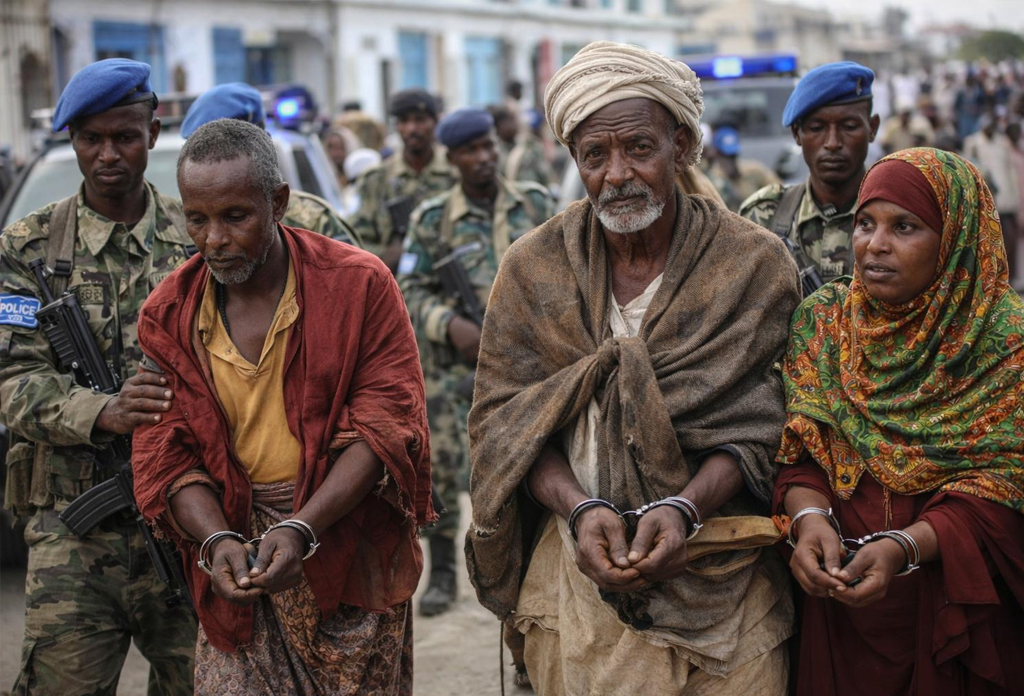
In Somalia’s fractured justice system, being from a minority community is itself a risk factor for wrongful arrest, coerced confession, and conviction. OPR’s field investigation documents how the 4.5 clan power-sharing system, weak legal institutions, and entrenched discrimination combine to make Somalia’s most vulnerable communities its most imprisoned.
Excluded by Design: Minority Communities in Somalia
Minority communities in Somalia — including the Bantu (Jareer), Benadiri (including the Gameedle, Shanshi, Moorshe, and Bravanese subgroups), Tunni, Gaboye (also known as Medri or Midgan), Eyle (or Reer Eyle), Riba, Shiidle, Bajuni, and Madhiban — experience systemic marginalization, continuous exclusion from political representation, and economic disenfranchisement. Somalia’s 4.5 clan-based power-sharing system officially designates these groups as “0.5,” reflecting their position outside the main clan hierarchy and formally embedding their exclusion in the architecture of the state itself.
These communities face higher poverty levels, land dispossession, limited access to justice and education, and frequent violence involving government authorities, dominant clans, and security forces. They are at heightened risk of arbitrary arrest, wrongful detention, and violence — often with minimal or no legal recourse. They are disproportionately targeted by security agencies such as NISA and clan militias operating in government-controlled regions, as well as in areas under Al-Shabaab control. Amnesty International reports document widespread abuses, including extrajudicial killings and torture.
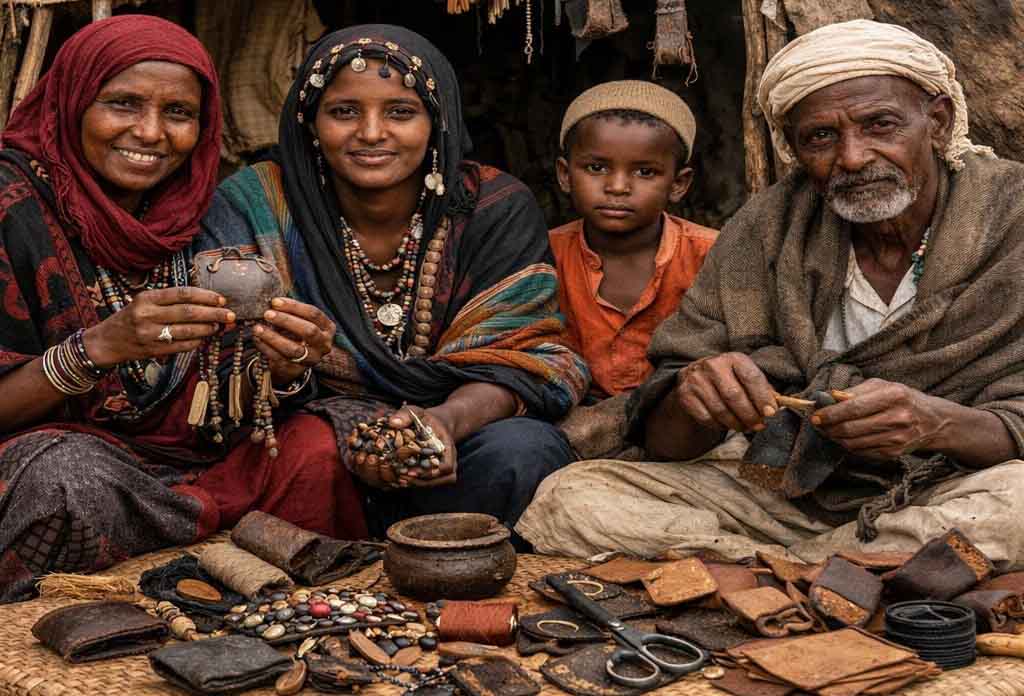
Legal documentation gathered by OPR during field investigation into wrongful convictions of minority community members. | OPR
Centuries of Exclusion, Intensified by State Collapse
The historical social structure of Somali minorities is characterized by a rigid hierarchical system rooted in traditional clan organization. The predominant clans — particularly the Samaale group, which includes the Darod, Hawiye, Dir, and Isaaq — primarily engaged in nomadic pastoralism and developed extensive networks of political and military power. Minority communities, by contrast, were largely excluded from these networks and, in many cases, subjected to strict prohibitions against intermarriage with majority clans. Violations of this taboo often resulted in social ostracism or, in some instances, severe or fatal consequences for the minority individual involved.
Certain occupational groups, such as the Gaboye, have historically faced stigmatization and discrimination, often unjustly labeled as outcasts and subjected to unfounded myths that contributed to their social marginalization. Many minority groups established subordinate relationships with dominant clans, serving as clients or bonded members known locally as “sheegat.” While these arrangements sometimes provided a measure of protection within the clan-based justice system (xeer), they also entrenched dependency and vulnerability.
The collapse of the Somali state in 1991 significantly intensified these vulnerabilities. Lacking the armed militia support and extensive clan networks available to majority groups, minorities became particularly susceptible to violence. Bantu communities residing in the riverine south endured devastating campaigns of scorched-earth tactics, resulting in land confiscation, destruction of property, and the looting of livestock. The loss of land — and the absence of any restitution or accountability mechanism — has entrenched inter-generational poverty and exclusion that persists to this day.
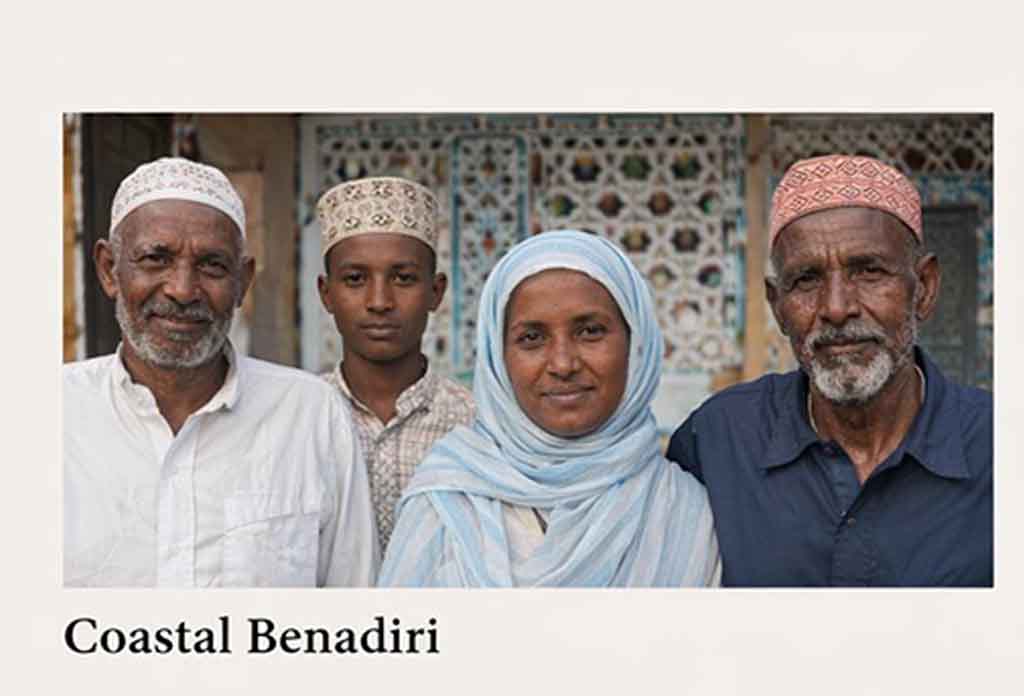
Members of Somalia’s Benadiri community, one of the minority groups documented in OPR’s investigation. | OPR
A Broken Judicial System That Breaks Minorities First
Somalia’s judicial system contributes to wrongful convictions through a combination of coercive interrogations, denial of legal representation, corrupt legal frameworks, and deeply embedded bias against minority communities. Decades of conflict and political instability have decimated judicial infrastructure, producing a system in which military courts frequently operate outside international standards, due process is bypassed as routine, and politically motivated convictions are not exceptional outcomes — they are predictable ones.
Suspects are often subjected to prolonged interrogations without access to counsel. Evidence is frequently withheld from the defense. In some documented cases, suspects are swapped or exchanged before court appearances: if a person from a dominant clan commits a crime, they may be exchanged with someone from a minority clan to obscure accountability and redirect legal liability. The minority individual then faces trial for an offense they did not commit, without the clan networks or financial resources to mount an adequate defense.
A critical shortage of trained judges, prosecutors, and legal practitioners, combined with inadequate court infrastructure and communications technology, severely limits the capacity to conduct fair, evidence-based trials. The police and judiciary are vulnerable to corruption, bribery, and external pressure from clan or political interests, which undermines their impartiality. The absence of a cohesive, unified legal system allows a confusing mixture of formal national law, customary practice, and Sharia to operate with minimal oversight — producing inconsistent application that falls hardest on those with the least institutional protection.
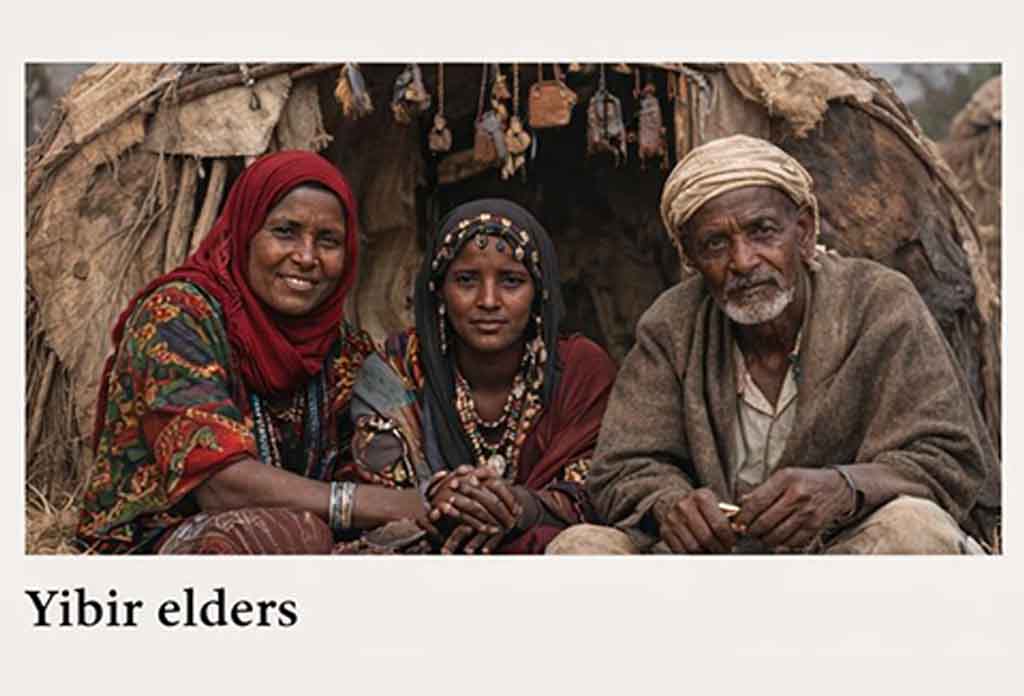
Members of the Yibir community, among the most marginalized groups in Somalia’s social hierarchy. | OPR
Discrimination Embedded Across All Systems of Life
The marginalization of Somalia’s minority communities is not confined to the justice system. Societal bias and systemic discrimination are embedded across justice, housing, employment, education, and healthcare — creating compounding disadvantages that are passed down through generations. In the justice system, minorities are disproportionately targeted by biased policing and subjected to inequitable sentencing. In employment, discriminatory hiring practices and structural barriers to advancement limit economic mobility. In education, communities in minority-dominated neighborhoods are systematically under-resourced, reducing opportunity from the earliest stages of life.
The mass displacement and land dispossession that followed Somalia’s 1991 collapse excluded minority families from accumulating or recovering wealth through property — an exclusion that remains largely unremedied more than three decades later. In healthcare, compounded by limited access to services and environmental injustice, minority communities face poorer health outcomes that neither the formal health system nor traditional clan-protection networks have adequately addressed. Policies that appear neutral on their face frequently produce unequal outcomes because they operate on top of a baseline of existing exclusion. Addressing these issues requires not neutrality, but active dismantling of the structural mechanisms that sustain inequality.
Names, Not Statistics: Cases Investigated by OPR
The following cases were directly investigated by OPR. They represent a fraction of the wrongful convictions involving minority community members that OPR has documented. In all cases, the systemic failures described above — lack of legal representation, coercive interrogation, judicial bias, and the absence of clan protection networks — were operative factors in the conviction.
Sharafow Gaara Gedi — 13 Years for a Death That Did Not Happen
Sharafow Gaara Gedi, a Bantu (Jareer Weyne) public-transport driver, was arrested in Mogadishu on December 23, 2013, after a passenger reportedly fell from the bus he was operating. Authorities alleged the passenger had died. On January 18, 2014, he was sentenced to six months in prison and ordered to pay compensation (diya) to the victim’s family. When the court was unable to locate the family, Sharafow remained incarcerated. He was held for thirteen years.
OPR investigated Sharafow’s case. Despite multiple attempts to locate the victim’s family, we found that the victim’s father was deceased and his mother was blind and deaf. An uncle subsequently told us that the victim was alive and had not been injured in the incident — and admitted that family members had provided false information to obtain compensation from Sharafow. In collaboration with other human rights organizations, OPR presented these findings to the authorities and successfully advocated for Sharafow’s release. Following his release, he reported that during his incarceration he lost his father, his mother, and his only son. He was 21 at the time of his arrest. He is now 34.
Mohamed Jeylani — 13 Years for a Killing He Did Not Commit
Mohamed Jeylani received a thirteen-year prison sentence following an incident in 2014. He was posted at a checkpoint near the KM4 intersection when a civilian snatched his firearm and used it to kill another civilian. Jeylani, who belongs to a minority group, was convicted of complicity in the killing. The individual who actually committed the shooting was not prosecuted.
The case illustrates with particular clarity how the swap mechanism operates: when accountability threatens to fall on someone from a more powerful group, minority individuals become available as substitutes within a system that lacks the independence to resist such pressure. Jeylani completed his sentence and is attempting to reintegrate into his community. No accountability was ever sought for those responsible for his prosecution.
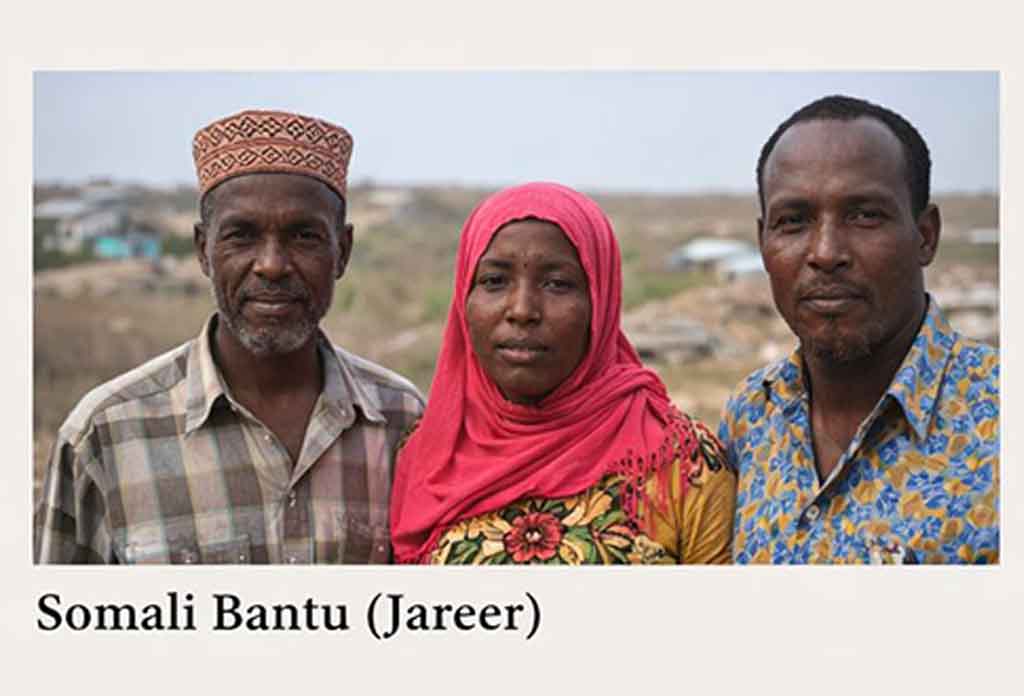
Members of Somalia’s Jareer (Bantu) community, who face some of the country’s highest rates of arbitrary detention and wrongful conviction. | OPR
Hussein Ahmadey — Tortured and Convicted of Rape He Did Not Commit
Hussein Ahmadey was employed by a woman who sells khat at Seypiano Khat Market. When the woman’s daughter became pregnant and the mother did not disclose the father’s identity, she accused Ahmadey of paternity and demanded he marry her daughter. He refused. Within 24 hours, police from Wadajir District detained him and transferred him to the Criminal Investigation Directorate (CID).
Following several days of severe torture, he refused to confess to fathering the child. Nonetheless, he was convicted of rape and sentenced to six years in prison in 2017. No DNA or physical evidence was presented. No independent legal representation was provided. His refusal to confess under torture was overridden by a process that treated accusation as proof and minority status as a reason not to look further.
An Engineer — Two Years Detained for Demanding to Be Paid
An engineer who wished to remain anonymous reported to OPR that he renovated a district administration building in Mogadishu. When the work was complete, the police commissioner allegedly refused to pay him or his workers. When the engineer sought to recover payment, the commissioner had him detained. He has been held for two years without any court appearance. No charges have been filed. No process has been initiated. He remains in custody as of this report’s publication.
His case illustrates a dynamic OPR has documented repeatedly: detention used not as a response to alleged wrongdoing, but as a tool to silence inconvenient demands — including the simple demand to be paid for work performed.
Numerous similar cases exist. OPR was unable to interview all victims due to access restrictions and ongoing security concerns for those still in detention.
Dismantling a System That Criminalizes Identity
The patterns documented in this investigation are not incidental. They are the product of a political and legal system that was designed, maintained, and has never been meaningfully reformed to protect the rights of those it most consistently harms. Addressing them requires reforms that are structural, not cosmetic.
OPR Calls For
- Immediate accountability for security operations that conduct mass sweeps of minority communities without due process or formal charge
- Restoration of fair-trial guarantees, mandatory legal aid, and transparent judicial procedures for all defendants — with additional safeguards for minority community members
- The establishment of an independent review mechanism for convictions obtained without legal representation or through coerced confession
- Land restitution and compensation mechanisms for minority communities dispossessed since 1991
- Inclusive political representation that removes the “0.5” designation from Somalia’s power-sharing framework
- International partner investment in legal aid, judicial capacity, and community-led reconciliation processes that specifically prioritize minority protection
Sharafow Gaara Gedi spent thirteen years in prison for a death that did not happen. The system that held him is still operating. The reforms that would prevent the next Sharafow have not been made.
How to cite this piece
Organization for Prisoners' Rights. (2026). Scapegoats of the System: The Deliberate Conviction of Somalia's Innocent Minorities. Mogadishu: OPR. https://opr.org.so/news/scapegoats-of-the-system-the-deliberate-conviction-of-somalias-innocent-minorities/