The Hole That Never Closed: OPR’s Comprehensive Investigation into Godka Jilacow’s Continued Operation Under NISA
Despite an official closure ceremony in December 2018, evidence from survivor testimony, security insiders, and documented detention cases confirms that Godka Jilacow — “The Hole” — remains operational as a NISA detention and interrogation facility
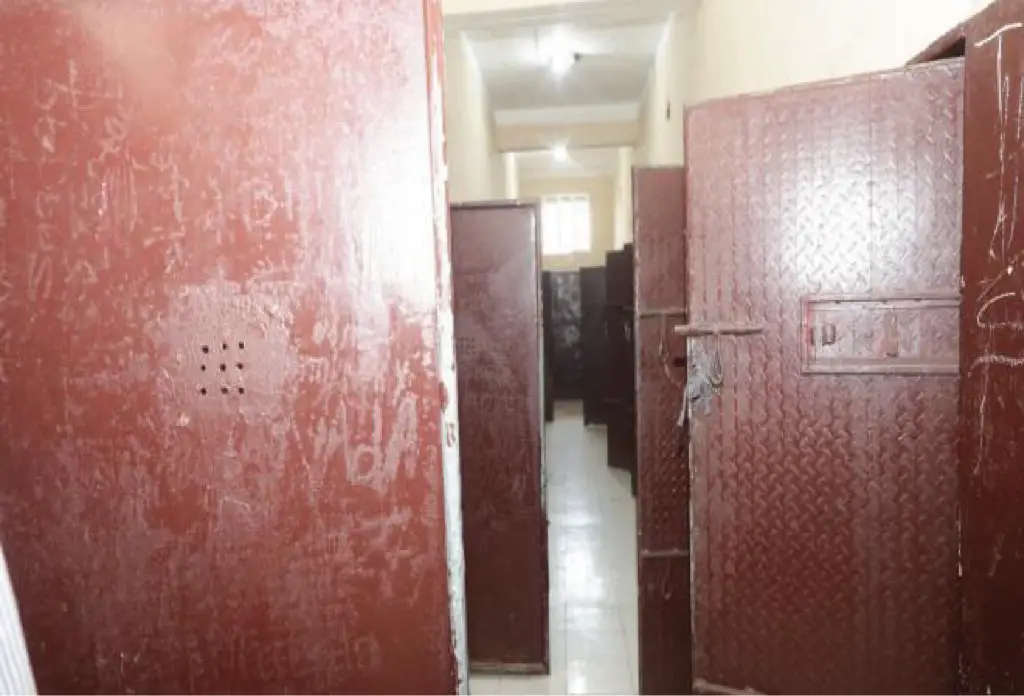
In December 2018, Somali authorities held a public ceremony, declared Godka Jilacow closed, and promised to transform it into a training academy. The ceremony was attended by senior officials. International observers welcomed it. The promise was made in daylight. OPR’s investigation, drawing on testimonies gathered across 2025 and 2026, finds that what was made in daylight was unmade in darkness. The Hole never closed.
The Closure That Was Announced
Nearly eight years after Somali authorities publicly declared the closure of Godka Jilacow Prison — commonly known as “The Hole” — evidence gathered by OPR indicates that the facility remains operational. The prison was officially closed on December 16, 2018, following sustained pressure from civil society groups, former detainees, journalists, and international human rights advocates. During a public ceremony attended by senior government officials, authorities announced the site would instead be transformed into the “Jilacow Academy,” a training facility for NISA. OPR’s investigation finds no evidence that this transformation was ever completed. What was declared a training academy has, according to multiple independent sources, continued to function as a detention and interrogation site — with the same impunity that defined its operation under every previous administration.
From the NSS to NISA: The Institution That Survived Its Own Abolition
The site is the same physical location used by the National Security Service (NSS) as one of its primary detention and torture facilities during the Barre dictatorship. Documented uses included subterranean cells, extreme heat, complete darkness, systematic denial of food and water, and incommunicado detention. When the Barre government collapsed in 1991, the NSS was formally dissolved. Its successor in institutional function is NISA. In 2023, Somalia enacted a NISA law granting sweeping powers of arrest, detention, and surveillance with minimal oversight. The UN Committee against Torture noted reports that NISA conducted arrests without warrants, held people for prolonged periods, mistreated suspects, and used unofficial holding locations. The continuity between NSS and NISA is not merely institutional. It is physical. The name above the gate has changed. The practices inside have not.
A detention facility publicly declared closed should not continue operating behind silence and secrecy. Genuine reform cannot exist where accountability remains locked behind iron gates.Ismail Abukar, Chairperson, OPR
What OPR Found: Sources, Testimony, and Institutional Silence
OPR’s investigation draws on senior officials and security insiders who requested anonymity, individuals who stated they had personally been detained at the facility in recent months, and cross-referencing with documented detention cases. Sources alleged that individuals are still transferred to Jilacow during criminal and intelligence-related investigations. Some former detainees reported being denied access to lawyers or family contact — incommunicado detention in direct violation of Somalia’s constitution and international law. Efforts to obtain clarification from relevant authorities produced no official response from Banadir regional intelligence authorities or the Somali Custodial Corps.
Key Unanswered Questions
- If the prison was officially closed in December 2018, under what legal authority is it currently operating?
- Which institution currently oversees the facility and bears responsibility for what occurs inside it?
- Are detainees formally registered and brought before courts within the constitutional 48-hour window?
- What independent mechanisms exist to investigate allegations of abuse at the site?
- Has the “Jilacow Academy” transformation ever been completed, and if so, why do detainees continue to report being held there?
What Detainees Report: Conditions Inside the Compound
Survivor testimony about Godka Jilacow has been strikingly consistent across different time periods and individuals. What survivors describe is not a repurposed training facility but an active detention site. Multiple survivors independently described extreme heat, near-complete darkness, and severe restriction of movement. Access to food was routinely denied for days. Medical care was absent. Detainees had no means of communicating with family or legal representatives throughout their confinement.
One individual held at the facility in recent months described the interrogation process: multiple officers, aggressive questioning about professional contacts and online activity, pressure to delete published material, and threats of prolonged detention or harm to family members. This pattern is identical to what OPR documented in its April 2026 report Silenced in the Dark.
“They took me at night, blindfolded me, and drove me somewhere I did not recognize. I was held in a room with no light, no food for two days, and no one told my family where I was.”Testimony gathered by OPR — name withheld for protection
Connecting the Dots: Cases Linked to Godka Jilacow in 2026
Bajaj Drivers and Activists: March 2026
In March 2026, Sadiyo Moalin Ali (Sadiyo Bajaaj) and fellow bajaj driver activists were arrested during protests against fuel price increases. While Sadiyo was formally held at Hodan District police station, other activists arrested in the same wave were transferred to locations their families could not identify — consistent with NISA’s documented practice of using Jilacow as an unregistered transfer point during active security operations.
Journalists: June–July 2026
On June 30, 2026, NISA officers abducted Mascuud Warsame, founder of Xogbile, from outside his office on Maka Al-Mukarama Road. He was driven away in an unmarked vehicle to an undisclosed location. His phone went dark. His family received no communication. When his wife went to the nearest police station, she was told he was not there. Security sources later confirmed he was held at a NISA detention facility — but no location was disclosed. These characteristics — unmarked vehicle, no registration, no family notification, no stated charges, no access to counsel — are identical to what OPR’s sources describe as the operational profile of Godka Jilacow under NISA management.
The Broader Pattern
OPR’s April 2026 investigation Silenced in the Dark, based on nearly one hundred testimonies, documented a systematic practice: individuals seized in unmarked vehicles, driven to undisclosed locations, held incommunicado, subjected to interrogation and coercion. Across all testimonies, survivors described underground or basement-level cells, extreme heat, darkness, denial of basic necessities, and complete isolation — converging consistently on the same location.
An Illegal Facility by Any Legal Standard
Somalia’s constitution requires detained persons be brought before a court within 48 hours. Incommunicado detention is a constitutional violation. Detention at an unregistered site with no judicial oversight constitutes arbitrary detention under the ICCPR, to which Somalia is a State Party. The CAT prohibits not only torture itself but the conditions that enable it: secret detention, denial of legal oversight, and the use of unofficial holding sites where abuse can occur beyond public scrutiny. The government’s silence in response to OPR’s inquiries is itself a legal problem. When a government fails to disclose the status of a detention facility and fails to respond to specific allegations about its continued operation, it cannot plausibly claim compliance with the Nelson Mandela Rules, which require all places of detention to be registered, inspectable, and subject to independent oversight.
A Facility That Cannot Be Left Unaccounted For
For many Somalis, Godka Jilacow is more than a prison. It is a symbol etched into public memory, representing decades of fear, silence, and unchecked state power. Its reported continued operation signals that the state’s commitment to reform is performative, and that the accountability promised in December 2018 was never genuine. A detention facility publicly declared closed that continues operating in secret is not a reform failure. It is an accountability failure — one that requires independent investigation, public disclosure, and consequences for those responsible.
OPR Calls On the Federal Government of Somalia To:
- Immediately clarify the legal and operational status of Godka Jilacow in a public, detailed, verifiable statement
- Allow independent human rights monitors — including OPR, Amnesty International, and UNSOM — unimpeded access to the compound
- Disclose a full register of all individuals detained at the facility since the declared closure in December 2018
- Ensure all individuals currently held at Godka Jilacow or any undisclosed NISA site are immediately brought before a court with access to legal counsel and family contact
- Investigate all allegations of unlawful detention, incommunicado confinement, and abuse linked to the facility, with findings made public
- Hold accountable — by name and institution — the officials responsible for the facility’s continued operation after its declared closure
The closure of Godka Jilacow was announced in daylight. Its continued operation happens in darkness. OPR will continue to document both.
How to cite this piece
Organization for Prisoners' Rights. (2026). The Hole That Never Closed: OPR's Comprehensive Investigation into Godka Jilacow's Continued Operation Under NISA. Mogadishu: OPR. https://opr.org.so/news/the-hole-that-never-closed-oprs-comprehensive-investigation-into-godka-jilacows-continued-operation-under-nisa/