
We Are Not Prisoners to Them: Inside the Economy of Exploitation at Mogadishu Central Prison
Federal Parliament’s Human Rights Committee documents inmates held since 2017 without trial, food and water available only for cash, solitary confinement used as punishment for refusing to pay, and ICRC donations confiscated and resold
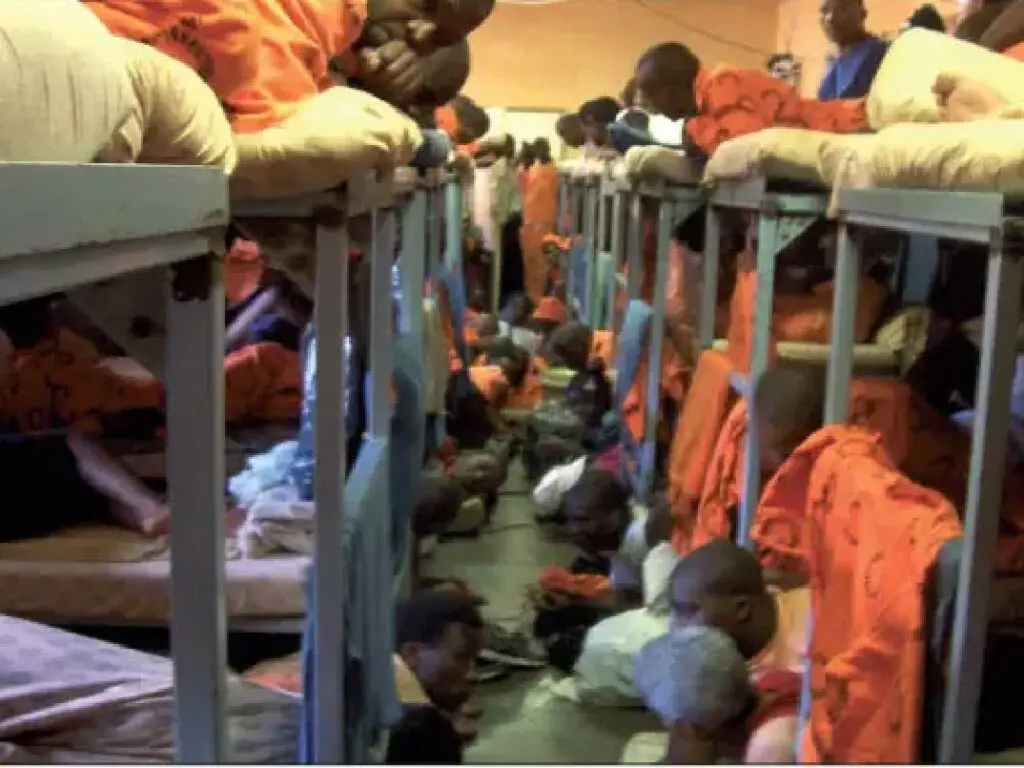
Inside Mogadishu Central Prison, a prisoner must pay for a small serving of rice, for ten minutes of fresh air, and 0 to receive a family visitor. A prisoner who cannot pay for water is placed in solitary confinement. Donations delivered by the ICRC disappear. Prisoners held since 2017 without trial are still waiting. This is not a description of extraordinary circumstances. This is the ordinary operation of the facility.
What the Federal Parliament’s Own Committee Found
The Federal Parliament of Somalia’s Human Rights Committee raised serious concerns regarding conditions at Mogadishu Central Prison following a review visit. The Committee noted that many inmates have been detained for extended periods without trial — some granted bail but remaining imprisoned, others having completed their sentences yet continuing to be held. Some individuals have been held for more than three years over minor debts amounting to as little as 0 USD. The Committee recommended immediate action to address these injustices, including the potential release of affected prisoners and accountability for those responsible.
During the Committee’s visit, they identified inmates who have reportedly been detained without trial since 2017. The Chief of the Somali Custodial Corps, Mahad Abdirahman, echoed these concerns, calling for immediate attention to access to justice and noting that some prisoners have been detained for up to ten years without sentencing. Bashe Yusuf Ahmed, for his part, rejected such claims, stating that investigations should be completed within 15 to 90 days. Yet the Committee found the evidence of prolonged detention with their own eyes, in the facility itself, during their visit.
Pay for Food. Pay for Water. Pay for Sunlight.
Inmates at Mogadishu Central Prison report being forced to purchase overpriced food from prison-run restaurants allegedly operated by senior prison officials. A small serving of rice without soup costs approximately USD. Although the prison is supposed to provide food, it is often of poor quality, forcing inmates to rely on paid alternatives. One inmate stated: “At first, we had to buy food, but now we even have to pay for drinking water because we were told the water pump generator is not working.” Another added: “We were recently asked to pay monthly fees for water. We told the authorities we have no money — we are under government care.”
Prisoners must also pay USD for just ten minutes of access to fresh air and sunlight. Family visits, previously allowed on Sundays and Wednesdays, have reportedly been suspended for extended periods. When visits do occur, families are prohibited from bringing food and must pay 0 USD. Inmates wait from 7:00 AM to 3:00 PM to receive visitors, only to be separated by barriers during brief interactions. A prison officer confirmed that he operates a restaurant within the prison and that inmates may receive visitors only if food is not brought in.
“We were recently asked to pay monthly fees for water. We told the authorities we have no money — we are under government care.”Prisoner at Mogadishu Central Prison — testimony provided to OPR
Solitary Confinement for Those Who Cannot Pay
Prisoners who refuse to purchase food may be punished through solitary confinement. During such confinement, inmates are reportedly stripped of their clothing, denied food, water, and prayer for up to five days, and forced to sleep in rooms contaminated with oil drained from vehicles. They are allowed only minimal sunlight and are allegedly subjected to physical abuse before being returned to their cells. These conditions, if accurately reported, constitute torture and cruel, inhuman, or degrading treatment under the Convention Against Torture and the Nelson Mandela Rules.
One prisoner described the internal structure of control: the facility is effectively managed by both a fellow inmate serving a long sentence and the prison commander. He called on the Somali government to intervene, emphasizing that prisoners lack access to food, water, and medicine unless they can pay.
ICRC Donations Resold to the People They Were Meant to Feed
Perhaps the most damning allegation to emerge from prisoner testimony is that humanitarian donations — including items delivered by the International Committee of the Red Cross such as goats, dates, and powdered milk — are confiscated after distribution ceremonies and are not received by prisoners. Prisoners report being asked to pay for items that international humanitarian organizations had already provided for their benefit at no cost. If this is accurate, it represents a systematic diversion of humanitarian assistance that violates both the legal conditions of that assistance and the basic human rights of the detainees it was intended to serve.
Prayer Restricted Inside Somalia’s Prison
The same prisoner further claimed that religious practices are restricted inside the facility: inmates are not permitted to study the Quran and may be punished for praying together. In a Muslim-majority country where both the constitution and international law protect the right to religious practice, restrictions on prayer and Quranic study inside a state detention facility represent a further layer of rights violation that has received no official acknowledgment or response.
OPR Calls For
- Immediate independent investigation into the operation of prison-run restaurants, the food and water payment system, and the alleged confiscation of ICRC humanitarian donations
- Immediate cessation of the practice of placing prisoners in solitary confinement for failure to purchase food or water
- Restoration of unconditional family visiting rights, including the right to bring food to inmates
- Immediate review and release of all prisoners held since 2017 without trial, and all those continuing to be held after completing their sentences
- Accountability for prison officials operating commercial enterprises within the facility and using disciplinary measures to enforce commercial compliance
- Protection of prisoners’ right to religious practice, including prayer and Quranic study
A prison where food costs money, water costs money, sunlight costs money, and humanitarian donations are confiscated is not a correctional facility. It is an extraction system. The people inside it are being exploited, not corrected. That must end.
How to cite this piece
Organization for Prisoners' Rights. (2024). We Are Not Prisoners to Them: Inside the Economy of Exploitation at Mogadishu Central Prison. Mogadishu: OPR. https://opr.org.so/news/we-are-not-prisoners-to-them-inside-the-economy-of-exploitation-at-mogadishu-central-prison/